Affordable Housing Peer Cohort: Policy Reform Seminar and Research
2026–2027 · Funded by Arnold Ventures · Carrie Makarewicz (PI), with Megan Yonke, who co-leads the seminar in a personal capacity and is also Deputy Director of the Colorado Division of Housing
About the project
Colorado is short roughly 106,000 housing units, and the cost of building affordable housing keeps rising, driven by layered regulations and legal structures as well as land, labor, and materials prices. Small and mid-sized developers feel those costs most, because a single delay or mistake can set back a project and reduce the number of units it delivers. That group now includes small housing authorities that are moving into development for the first time, as new state funding and local housing goals open the door.
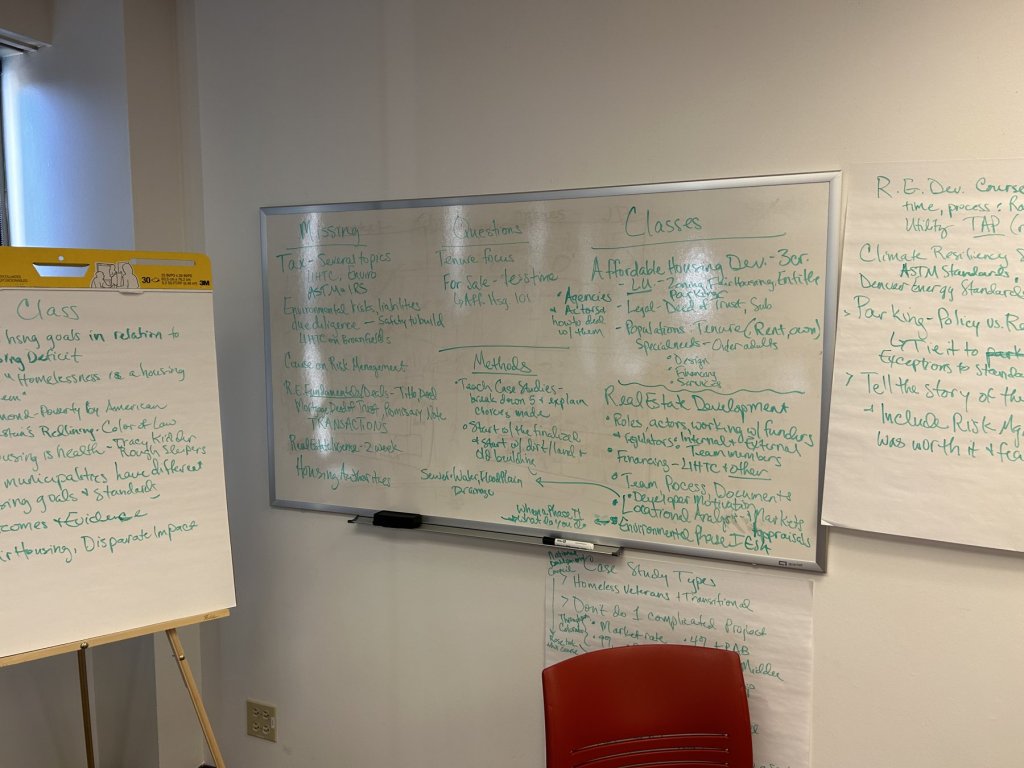
This project brings together about 25 participants from Colorado’s Front Range, from Fort Collins to Colorado Springs: small and mid-sized affordable housing developers, along with staff from large local governments and the Colorado Division of Housing. The cohort meets in person twice a month for 17 three-hour evening sessions over nine months, from September 2026 through May 2027; the first four sessions have been completed. Each session pairs an expert on one stage of the development process with peer exchange, hands-on troubleshooting, and updates from the research team on questions raised in earlier sessions.
Between sessions, the CU Denver team, including graduate research assistants from the Master of Urban and Regional Planning program, documents the barriers participants raise, traces their roots, and identifies changes to policies, programs, and regulations that could resolve them. Because developers and public staff sit at the same table, the seminar also creates a feedback loop for the agencies administering Colorado’s new housing funds.
Topics
- Ownership issues, title, and surveys
- Community engagement
- Government regulations, entitlements, and permitting
- Horizontal infrastructure
- Environmental studies and remediation
- Real estate law and contracts
- Private financial institutions and mortgages
- Market studies and appraisals
- Government lenders
- Income taxation and value
- Architecture and general contractors
- Factory-built structures
- Energy efficiency
- Tax credits and community-based real estate
- Master site development
- State and federal funding sources
What it will produce
- A practitioner guidebook summarizing the session content, peer lessons, and solutions identified through the research, shared publicly rather than held as proprietary course material
- Policy briefs and potential policy, program, and regulatory proposals for issues that cannot be solved without changes to funding streams, laws, or rules
- Journal articles for practitioner-facing outlets such as Housing Policy Debate, Cityscape, and the Journal of the American Planning Association
- Curriculum for CU Denver’s interdisciplinary graduate certificate in affordable housing
- Presentations to the Colorado Housing Consortium and at state and national housing conferences
Related work
The seminar builds on the regional findings in Seeking Housing Affordability in the Denver Metro Area and complements the state policy research in Affordable and Resilient Transit Oriented Communities.

